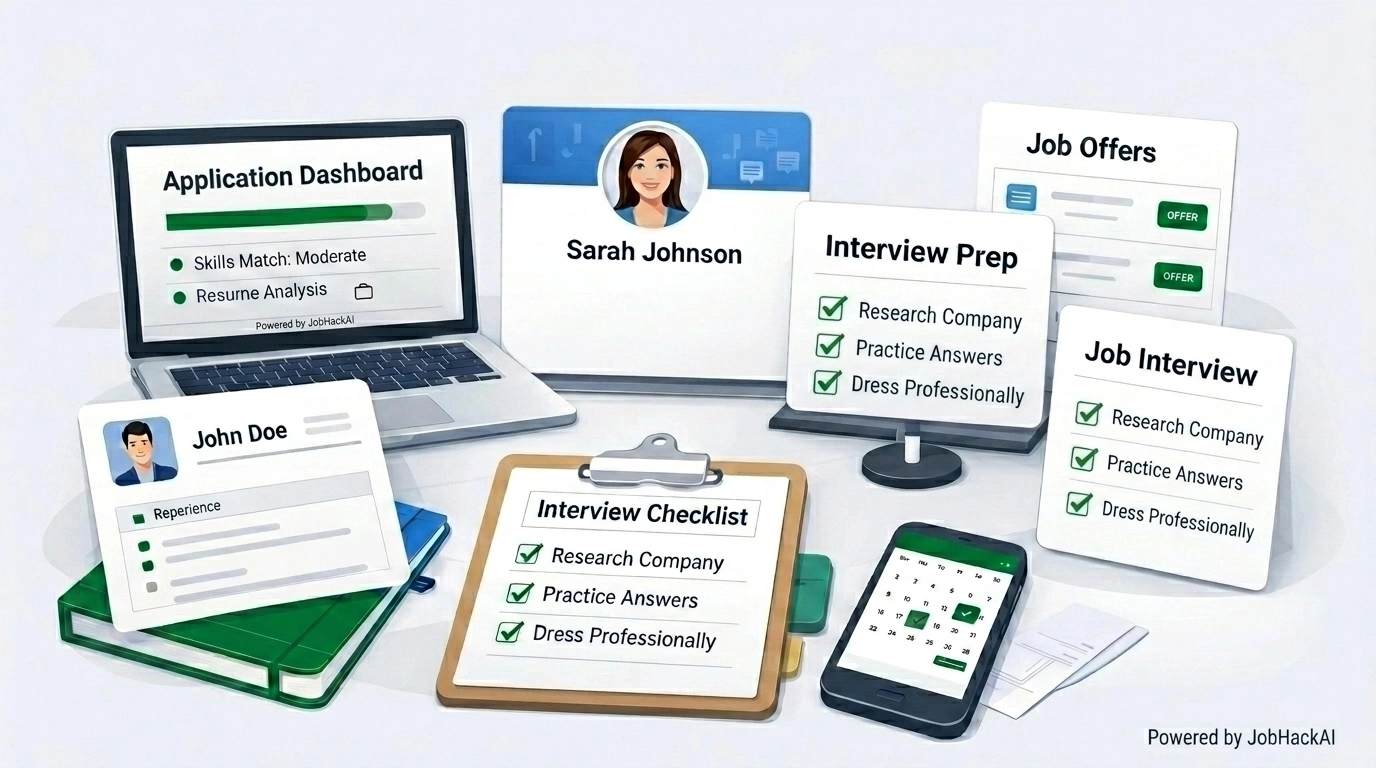
Modern hiring has become a marathon of endurance. By the time you reach the interview stage in 2026, you have likely navigated automated resume filters, survived AI video screenings, and waited weeks for a human response. This process often feels less like a career move and more like a humiliation ritual. When you finally get the invite, the stakes feel impossibly high.
Statistics show that 93% of candidates experience significant anxiety before an interview. Even more telling is that 85% of job seekers feel fundamentally unprepared to answer behavioral interview questions despite spending hours researching them. This gap between "knowing what might be asked" and "knowing how to answer" is where most careers stall.
At JobHackAI, we see this as the Experience Gap. It is the distance between your actual professional achievements and your ability to articulate them under pressure. Closing this gap requires moving past the passive consumption of advice and into active, structured practice.
The Humiliation Ritual of Modern Hiring
The current job market treats human talent like a commodity. Candidates are expected to perform perfection on demand. You are asked to recall specific moments from three years ago and turn them into compelling narratives in seconds.
This environment creates a psychological feedback loop. You feel like a cog in a machine, which increases your anxiety. That anxiety then triggers a "freeze" response when an interviewer asks a standard behavioral question like, "Tell me about a time you failed."
The humiliation ritual is the feeling that you are being judged not on your skills, but on your ability to play a specific, performative game. When you realize the game is rigged toward those who have mastered the "art" of interviewing rather than those who are best for the job, the anxiety becomes overwhelming.

Why the "Reading Trap" Is Killing Your Chances
Most people prepare for interviews by reading. They find a list of the top 100 behavioral interview questions and read through the "ideal" answers. On the surface, this feels productive. You feel like you are gaining knowledge.
In reality, this creates an illusion of competence. Reading an answer is a passive activity. It uses a different part of the brain than the one required to retrieve a memory and structure a response. This is why so many people "black out" or start rambling during the actual interview. They have the information in their heads, but they haven't built the neural pathways to deliver it.
To beat behavioral interview questions, you must stop reading and start producing. Move from passive consumption to active output.
The Experience Gap: Knowledge vs. Execution
The Experience Gap explains why a highly qualified Senior Developer or Marketing Director can still bomb an interview. They have the experience, but they lack the interface.
Think of your brain as a hard drive. Your professional experiences are the data. The interview is the query. If your "search function" is slow because you haven't indexed your memories, the system crashes. You end up giving vague answers like, "I usually just work hard to solve problems," instead of providing a concrete example of a time you saved a project from a $50,000 mistake.
Bridging this gap requires a framework that forces you to organize your thoughts before the clock starts ticking.

The SAO Framework: Situation + Action = Outcome
Most career coaches preach the STAR method (Situation, Task, Action, Result). While effective, it is often too bulky for the fast paced nature of modern interviews. At JobHackAI, we advocate for a streamlined version: the SAO framework.
- Situation: Set the scene in two sentences. What was the problem? What was at stake?
- Action: What did you specifically do? Focus on your individual contribution, not the team.
- Outcome: What was the measurable result? Use numbers, percentages, or specific feedback.
By focusing on Situation + Action = Outcome, you remove the fluff. You stop the rambling that often comes with the "Task" portion of STAR. You get straight to the value you provide.
To see how this fits into a broader preparation strategy, check out our 7-day interview prep routine.
Writing practice and spoken interview practice
One of the biggest hurdles in interview prep is the performative aspect. Practicing in front of a mirror or with a friend can actually increase anxiety because you are focused on your body language and tone before you have even mastered your content.
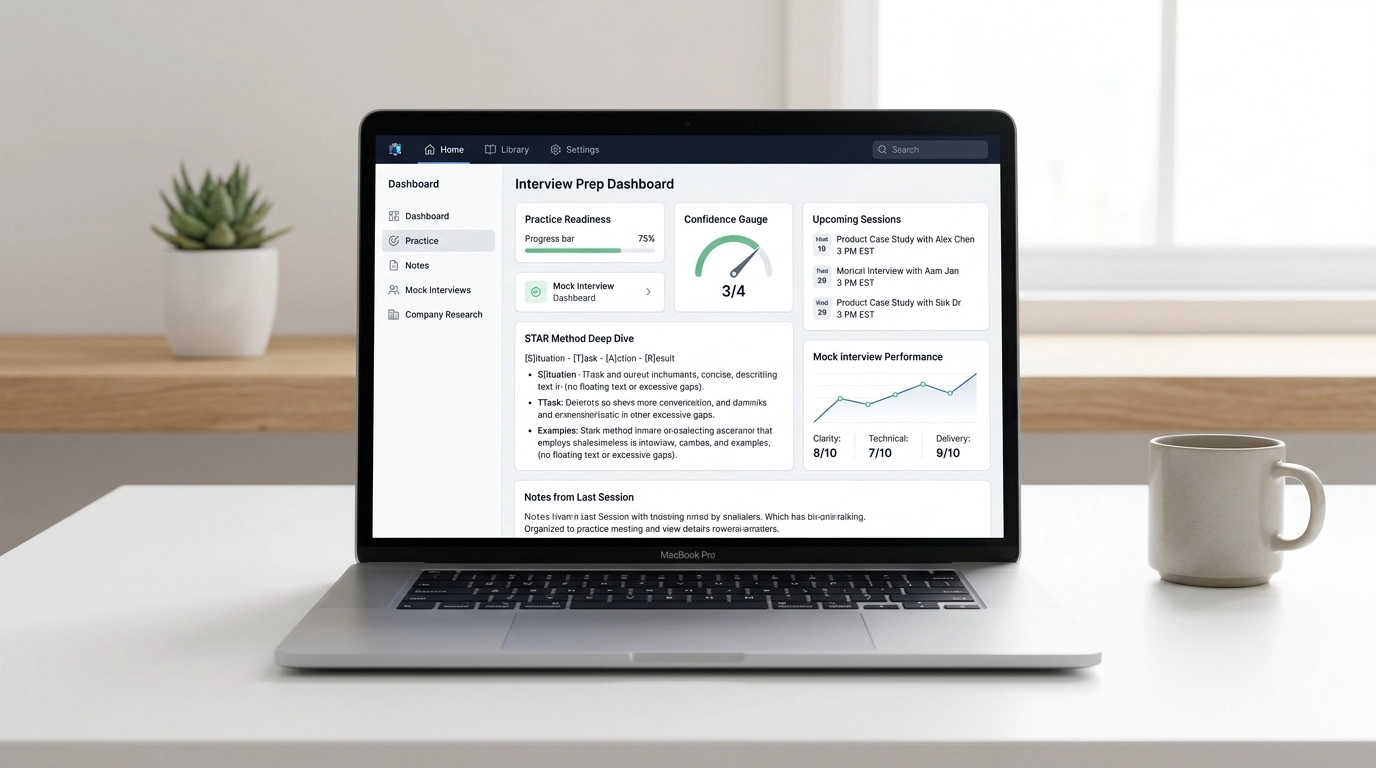
Writing an example answer can help you organize your experience before an interview. JobHackAI also offers Voice Mock Interview practice, where you answer aloud, respond to follow-up questions, and review feedback on your spoken responses.
1. Logical Clarity
When you type, you can see your rambling in real time. You see the "and," "um," and "so" that clutter your speech. Typing forces you to be concise. If a response looks like a wall of text on a screen, it will sound like a never-ending monologue in an interview.
2. Muscle Memory
The act of physically typing out the SAO framework creates a different type of retention. You are building a mental template. When an interviewer asks a question, your brain automatically starts sorting your memory into Situation, Action, and Outcome.
3. Reduced Cognitive Load
By removing the need to worry about your voice or eye contact during the initial practice phase, you can focus entirely on the quality of your evidence. Once your stories are "locked in" via text, the verbal delivery becomes infinitely easier.
Turning Anxiety Into Evidence
Anxiety is often the result of feeling out of control. When you walk into an interview hoping they don't ask something you can't answer, you are in a defensive crouch.
When you have practiced your SAO stories via a structured interface, you flip the script. You aren't hoping they ask the "right" questions; you are looking for any opening to deliver your prepared evidence.
A question about conflict becomes an opportunity to share your "Conflict Resolution" SAO story. A question about a mistake becomes an opportunity to show your "Accountability and Growth" SAO story. You stop being a victim of the interview and start being the narrator.
How to Start Your Practice Today
If you are part of the 85% who feel unprepared, the fix isn't more reading. It is more doing.
- Identify Your Pillars: Choose 5 to 7 core professional stories that cover leadership, technical skill, conflict, and failure.
- Map to SAO: Write these stories out using the Situation + Action = Outcome format. Keep them under 150 words each.
- Use JobHackAI: Write and refine an example answer for a behavioral question, then use Voice Mock Interview practice to answer aloud and handle follow-up questions. One lifetime free interview includes a preview of one strength and one area to improve. Paid access unlocks the full report and transcript, plus more practice.
- Refine and Repeat: Don't just do it once. The goal is to make the framework second nature.
You can explore more about how we help you master these techniques on our features page.
The End of the Humiliation Ritual
The hiring process might still feel like a ritual, but it doesn't have to be a humiliation. When you show up with structured, evidence-based answers, you command respect. You move from being a "job seeker" to being a "solution provider."
Interview anxiety is a signal that your preparation hasn't yet met your ambition. By moving away from passive lists and into active, text-based practice, you bridge the Experience Gap.
You have the experience. You have the skills. Now, it is time to build the interface that lets the world see them.
For more insights on navigating the modern career landscape, visit our blog home or learn about ATS optimization to ensure you get more interview invites in the first place. Ready to start? Visit jobhackai.io and take control of your next interview.
Stop reading. Start practicing.
JobHackAI gives you structured behavioral interview practice with instant AI feedback on every answer. Close the Experience Gap today.
See practice options